
Émile Kangue
Profession: Singer, composer, bassist.
emilekangue.com, Agenda Culturel du Cameroun
Genre: Makossa (a popular music genre in Cameroon).
Career Highlights
Early life: He started in a choir with his mother and later joined a school orchestra called Les Bandeaux Noirs. emilekangue.com
Black Styl: In the early 1970s, he joined the influential makossa group Black Styl, playing bass alongside other big names like Nkotti François and Toto Guillaume.
Solo Career: He went solo and released Dikom Lam La Moto in 1980. The song was very successful and sold over 50,000 copies, earning him a gold record. emilekangue.com, Actu Cameroun
Legacy & Recognition:
Considered a pioneer of modern makossa.
Celebrated in Cameroon for decades; at one point, his 45 years of career were publicly honored.
Source: ChatGPT
Music style & impact
Genres: Makossa, soukous, funk, disco, Afro-pop
Known for blending African rhythms with Western styles
Big hit: “Africa Music Non-Stop” (1984)
His music helped shape modern African pop sounds and influenced artists across the continent.
Career highlights
Started music young (around age 13) in Douala
Worked in Gabon, becoming:
Director of the National Orchestra of Gabon
Founder of Studio Mademba
Produced major African artists like:
Manu Dibango
J.B. Mpiana
Werrason
Dina Bell
(born May 28, 1953) is a legendary Cameroonian musician widely regarded as one of the most influential figures in the Makossa genre. Known by the nickname “Bazor,” he is celebrated for his smooth, melodic voice and his role in shaping the golden era of Cameroonian music during the 1970s and 1980s.
Key Facts & Career
Early Life: Born into a musical family in Douala-Akwa, Cameroon, he began his journey singing in church choirs.
Musical Style: He is known for “pure” and melodic Makossa, often characterized by its upbeat rhythm and soul-stirring vocals.
Breakthrough: His debut album, Yoma Yoma (1978), was a massive success in Cameroon, released while he was living in France.
Legacy: Despite the decline of Makossa’s popularity in later years and struggles with piracy, he remains a respected icon. He has spent recent years supporting young artists through his own recording studio
Nkodo Sitony: his life, his musical significance and legacy 👇
🎤 Who he was
Nkodo Sitony — real name Nkodo Si Tobi François — was a Cameroonian singer, born on 25 August 1959 in New Bell (Douala, Cameroon).
🎶 Musical Career & Style
Nkodo Sitony was one of the main figures of Bikutsi — a traditional/popular musical genre from Cameroon.
He is often credited with modernizing Bikutsi during the 1980s.
His musical background included percussion, guitar, balafon, and more: he blended traditional rhythms with influences from afrobeat, high-life, and modern instrumentation.
Cameroun24, Afrik
đź“€ Achievements & Influence
Over a 40-year career span, he produced about 25 albums.
ÔCamer.com, cameroonconcordnews.com
His 1986 album 90° de Bikutsi à l’ombre became iconic: it earned him, in 1988, the awards for “Song of the Year” and “Artist of the Year.”
Beyond music, his style — mixing traditional rhythms and instruments with modern sounds — helped pave the way for “techno-Bikutsi” or modern Bikutsi, influencing subsequent generations of Cameroonian musicians.
His music continues to resonate today: many Cameroonians (and fans of African music) still listen to his songs; his fusion of tradition and modernity remains influential.
ESA’ the stage name for Stephan Dayas Nguea, is a Cameroonian musician, singer, and producer known for blending traditional African rhythms with modern soul and funk.
Early Life and Musical Origins
Family Background: Born into a musical family, his father was a guitarist during the German protectorate era in Cameroon. He developed his passion for music alongside his brother, George Dayas Wonjamouna, influenced by 1960s African sounds like Makossa, highlife, and Congolese music.
ESA Formation: The name “ESA” (pronounced “ESSA”) comes from the Sawa people of southwest Cameroon, meaning “evocative magic” or “spiritual contact”. Originally formed in 1986 in Douala as a duo with Martin Socko Moukoko, the project eventually became Stephan Dayas’s solo venture. Source: AI Google
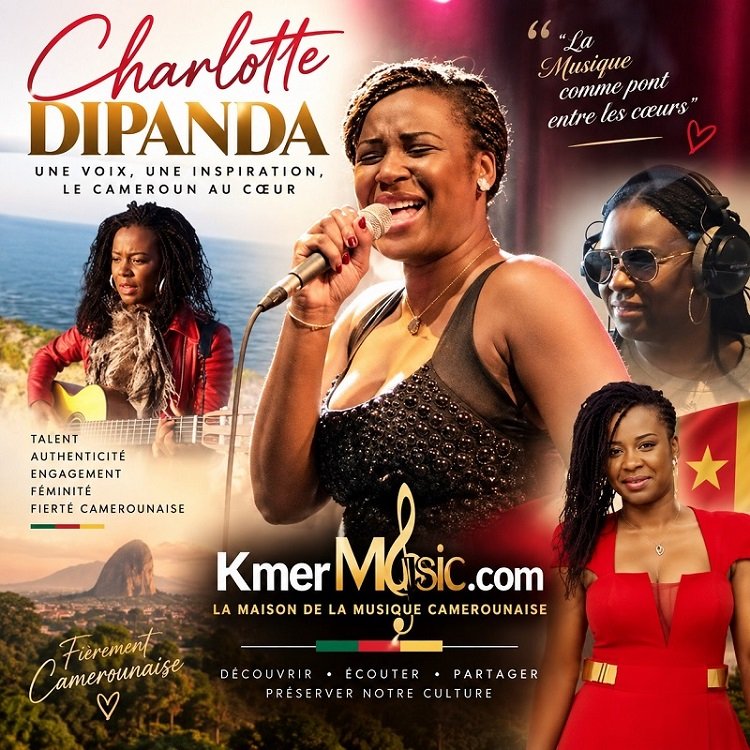
Spotlight on Charlotte Dipanda’s Musical Journey
1. Musical Style and Influence:
Charlotte Dipanda’s music is deeply rooted in African traditions, particularly the Bikutsi and Makossa genres, both of which originate from Cameroon. She seamlessly blends these traditional styles with contemporary elements like Afropop and R&B, which has allowed her to reach a broader, international audience. Her voice is often described as soulful and emotive, giving her songs a unique depth and richness.
Bikutsi: This genre, associated with the Beti people of Central Cameroon, is known for its rhythmic drumming and fast-paced, lively beats. Charlotte’s fusion of Bikutsi with modern sounds helps keep the genre fresh and appealing.
Makossa: Another style of music from Cameroon, characterized by upbeat rhythms and African danceable grooves. Charlotte’s incorporation of this style allows her to blend cultural authenticity with universal appeal.
2. Early Career & Breakthrough:
Charlotte Dipanda first made waves in the mid-2000s, thanks to her debut album, “Missa” (2006), which was well-received both in Cameroon and across Africa. The album’s success helped solidify her as one of the rising stars of Cameroonian music. She quickly became known for her beautiful, heartfelt lyrics and melodic compositions.
Her career took another leap forward in 2010 with her second album “Nasek” which included tracks that not only charted in Cameroon but also gained international attention, leading to performances in Europe and other parts of the world.
ChatGPT